
A Complete Guide to Duplex Flanges and ASTM A234 WPB Fittings for Modern Industrial Applications
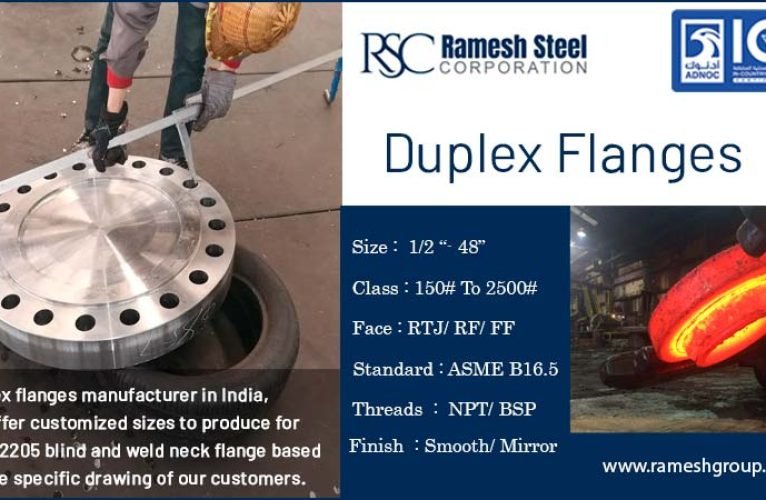
In today’s rapidly evolving industrial landscape, the demand for durable, corrosion-resistant, and high-strength piping components continues to rise. Whether it’s oil and gas, petrochemical, marine engineering, or power generation, industries rely heavily on advanced materials that offer superior performance under extreme conditions. Two such essential components in modern piping systems are duplex flanges and fittings manufactured as per ASTM A234 WPB standards. Both play crucial roles in ensuring piping integrity, efficiency, and safety.
This blog explores the features, benefits, and applications of duplex flanges and ASTM A234 WPB fittings, and highlights why industries choose them for seamless and reliable operations.
Understanding Duplex Flanges
Duplex flanges are manufactured from duplex stainless steel—an alloy that combines the best properties of austenitic and ferritic stainless steels. This dual-phase microstructure provides exceptional strength, improved toughness, and excellent corrosion resistance, especially in environments exposed to chlorides and harsh chemicals.
Key Benefits of Duplex Flanges
1. Superior Corrosion Resistance
Duplex stainless steels provide excellent resistance to pitting, crevice corrosion, and stress corrosion cracking. This makes duplex flanges ideal for offshore platforms, desalination plants, and chemical processing facilities where exposure to seawater and corrosive agents is frequent.
2. Higher Mechanical Strength
One of the biggest advantages of duplex flanges is their increased yield and tensile strength compared to standard stainless steels. This allows for reduced wall thickness and overall weight, making them cost-effective for large-scale piping networks.
3. Cost Efficiency
Though duplex alloys may initially cost more than conventional steel, their long-term benefits—reduced maintenance, longer service life, and superior structural integrity—result in significant savings over time.
4. Temperature and Pressure Durability
Duplex flanges perform well under fluctuating temperatures and high-pressure applications. This reliability is essential for industries where mechanical failures can lead to costly downtime.
Where Are Duplex Flanges Used?
Due to their unique characteristics, duplex flanges are widely used in:
-
Oil & gas offshore and onshore pipelines
-
Chemical and petrochemical processing
-
Paper and pulp industries
-
Water treatment and desalination plants
-
Marine engineering systems
-
Heat exchangers and pressure vessels
Their robustness and corrosion resistance make duplex flanges the preferred choice where reliability and performance are non-negotiable.
What is ASTM A234 WPB?
While duplex flanges dominate high-corrosion environments, ASTM A234 WPB refers to a specification for carbon steel pipe fittings used in moderate- and high-temperature services. WPB stands for Wrought Pipe Grade B, a widely used material grade for butt-welded fittings like tees, elbows, reducers, and caps.
These fittings play a vital role in connecting and directing the flow within piping systems designed for oil refineries, power plants, and industrial boilers.
Characteristics of ASTM A234 WPB Fittings
1. High Strength and Durability
ASTM A234 WPB fittings offer excellent mechanical strength, making them suitable for high-pressure and high-temperature piping systems.
2. Excellent Weldability
The “wrought” nature of WPB material ensures easy and strong welding connections, reducing the risk of cracks or failures.
3. Temperature Resistance
These carbon steel fittings are designed to withstand temperatures typically encountered in refinery, steam, and thermal power systems.
4. Versatility
ASTM A234 WPB fittings come in a wide range of shapes and sizes, making them adaptable for complex pipeline designs.
Applications of ASTM A234 WPB
The versatility of ASTM A234 WPB makes it indispensable across several sectors, including:
-
Oil and gas refineries
-
Petrochemical plants
-
Thermal power stations
-
Boiler and pressure piping systems
-
Industrial fluid transfer networks
Their reliability, cost-effectiveness, and high performance make them one of the most widely used carbon steel fitting standards globally.
Duplex Flanges vs. ASTM A234 WPB Fittings: A Complementary Combination
Though duplex flanges and ASTM A234 WPB fittings are made from different materials—duplex stainless steel and carbon steel, respectively—both serve vital roles in fluid transfer systems. Duplex flanges are preferred for corrosive environments, while ASTM A234 WPB fittings excel in high-temperature and high-pressure conditions.
In many industrial systems, you’ll find these components working together. Duplex flanges may be installed at points where corrosion resistance is crucial, while ASTM A234 WPB fittings ensure the structural robustness of the rest of the pipeline.
Conclusion
Both duplex flanges and ASTM A234 WPB fittings are essential components in modern industrial piping systems. While duplex flanges offer unmatched corrosion resistance and enhanced strength, ASTM A234 WPB fittings bring durability, weldability, and cost-effectiveness to high-pressure applications. Understanding their properties and applications helps industries make informed choices to enhance system reliability, reduce downtime, and improve performance.
If you’re planning a new piping project or upgrading an existing system, choosing the right combination of duplex flanges and ASTM A234 WPB fittings can provide long-term safety and efficiency.